In short:
• A marine water filter protects your vessel’s watermaker and onboard plumbing by removing sediment, debris, and contaminants before they cause damage.
• West Palm Beach boaters face unique water quality challenges, making proper filtration a practical necessity rather than an optional upgrade.
A quality marine water filter in West Palm Beach FL is one of the most practical investments a boat owner can make. Whether you draw from marina dock water or rely on a watermaker at sea, unfiltered water puts your vessel’s plumbing, membranes, and onboard systems at risk.
What a Marine Water Filter Actually Does
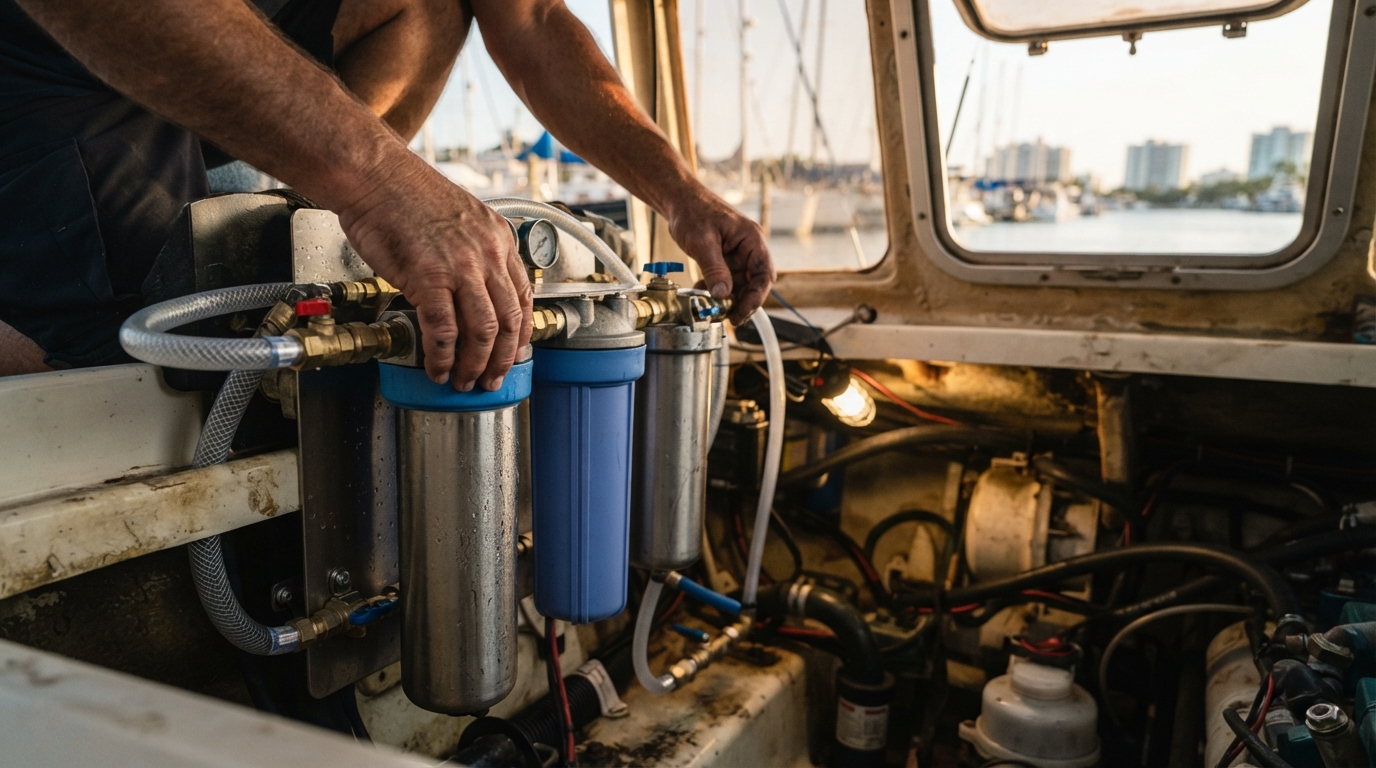
A marine water filter helps remove sediment, debris, and contaminants from incoming water, protecting your vessel’s watermaker and plumbing system while improving overall water quality. That protection matters at every stage of use, from filling tanks at the dock to producing freshwater offshore.
Marine filtration typically works in stages:
• Pre-filtration: Captures sediment, rust particles, and biological matter before water enters the watermaker membrane.
• Membrane filtration (RO): A semi-permeable membrane rejects dissolved salts, heavy metals, and microorganisms.
• Post-filtration or UV sterilization: A final pass removes any remaining pathogens or taste compounds.
Related accessories such as dock water filters, UV sterilizers, and galley reverse osmosis systems each serve a distinct role in a complete onboard water treatment setup. Skipping any stage shortens membrane life and compromises water quality.
Why West Palm Beach Creates Specific Filtration Challenges
The boating environment around Palm Beach County puts particular stress on water systems. Marina dock water often carries chloramines, sediment from aging hose connections, and biological load from warm coastal waters. Offshore, the Atlantic and Intracoastal Waterway present high salinity and variable turbidity that demand robust pre-filtration before any reverse osmosis membrane can work efficiently.
Water conditions can vary significantly depending on the source and intended use, making it essential to choose equipment that is properly designed for the environment. A filter spec that works in a northern freshwater lake will underperform in South Florida’s warm, saline, and biologically active coastal waters.
The EPA’s Clean Boating Act guidance underscores the broader responsibility vessel operators have to manage onboard water systems responsibly, including how water is sourced, treated, and discharged. Proper filtration supports that goal at the vessel level.
Marine Filter Types: A Practical Comparison
Choosing the right filter depends on your vessel size, usage pattern, and whether you rely on dock water, a watermaker, or both. The table below compares the most common options:
|
Filter Type |
Best For |
Key Benefit |
Limitation |
|
Sediment pre-filter |
All vessels |
Protects membranes from particles |
Does not remove dissolved contaminants |
|
Carbon block filter |
Dock water users |
Removes chloramines and odor |
Limited lifespan in high-chloramine water |
|
RO membrane system |
Offshore/extended cruising |
Converts seawater to potable water |
Requires adequate pressure and pre-filtration |
|
UV sterilizer |
Final-stage treatment |
Kills bacteria and pathogens |
Does not remove sediment or dissolved solids |
Reliable freshwater production is essential for vessels that spend extended periods away from shore. A high-performance watermaker enables crews and passengers to convert seawater into usable freshwater, reducing dependence on stored water supplies. Pairing the right pre-filter with an RO membrane extends system life and reduces service calls.
Maintenance, Service, and Choosing a Provider
Membrane replacements, system flushes, filter changes, and automation upgrades extend system life and improve water quality. For most vessels, filter cartridges should be inspected seasonally, and membranes checked annually, though high-use liveaboards may need more frequent service.
When evaluating a service provider, look for:
• Documented experience with marine-specific systems, not just residential RO
• Ability to service multiple brands and system configurations
• Parts availability and dockside or on-site service capability
• Knowledge of local water conditions in Palm Beach County
Reverse Osmosis of South Florida provides advanced water filtration systems designed to support residential, commercial, and marine applications across a wide range of operating environments. The company also handles repairs, refits, and parts for most brands of watermakers, which matters when you need service on an existing system rather than a full replacement.
Frequently Asked Questions
How often should I replace my marine water filter cartridge? Most sediment and carbon pre-filters need replacement every three to six months under regular use. High-turbidity or high-chloramine source water accelerates wear, so inspect cartridges more frequently if you use dock water regularly.
Can I use a residential RO filter on my boat? Residential units are not designed for the vibration, space constraints, or variable water sources found on vessels. Marine-rated systems use reinforced housings and fittings built to withstand the marine environment.
What is the difference between a watermaker and a marine water filter? A watermaker (reverse osmosis desalination system) produces freshwater from seawater. A marine water filter treats incoming water, whether from the sea or a dock connection, to remove contaminants before use or before it reaches the watermaker membrane. Most effective setups use both.
Do I need a UV sterilizer if I already have an RO membrane? An RO membrane removes the vast majority of pathogens, but a UV sterilizer adds a final layer of protection against any bacteria or viruses that pass through. For liveaboards or vessels used for extended offshore passages, the combination is worth considering.
For boat owners in Palm Beach County looking for expert guidance on marine water filtration systems, Reverse Osmosis Watermakers of South Florida offers sales, installation, and service for marine watermakers, dock water filters, UV sterilizers, and galley RO systems. Contact them to discuss the right filtration setup for your vessel and usage pattern.