Bottom line:
• Thrift store shopping typically costs a fraction of retail prices for clothing, housewares, and collectibles while reducing textile waste sent to landfills.
• Resale shops often carry rotating inventory, so item availability and condition vary by visit.
• Many thrift operations, including charity-run resale stores, direct sale proceeds toward a stated cause rather than private profit.
Thrift store shopping means buying secondhand clothing, furniture, and household goods at prices well below retail, while also diverting usable items from landfills. For shoppers in Chantilly, VA, weighing resale against traditional retail, the price difference and the environmental trade-off are often the two biggest deciding factors.
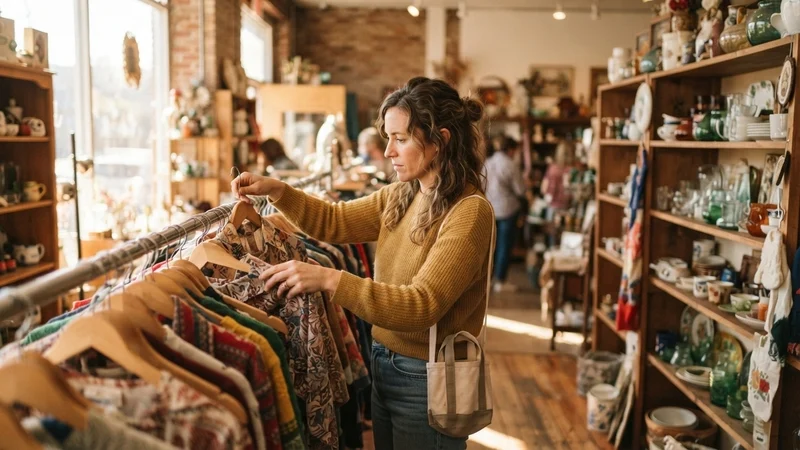
Thrift store shopping differs from retail buying in cost structure, inventory turnover, and where sale proceeds go. Unlike a department store that restocks identical items, a resale shop depends on donated goods, which means selection changes week to week and pricing reflects condition rather than a fixed markup. This unpredictability is part of what draws repeat shoppers who treat browsing as part of the value.
Friends of Homeless Animals operates The Treasure Hound, a resale shop whose listed inventory includes clothing, jewelry, furniture, housewares, antiques, collectibles, art, decor, and seasonal items. Based in the USA, the organization supports shoppers across Chantilly, VA, through this resale model, directing sale proceeds toward its stated animal welfare mission.
Thrift Shopping Versus Retail: A Cost and Impact Comparison
Retail pricing covers manufacturing, shipping, and brand markup, while resale pricing reflects the item’s condition and the shop’s cost-recovery goals. The comparison below outlines the practical differences shoppers tend to notice first.
| Factor | Thrift Store Shopping | Traditional Retail |
| Typical pricing | Set by condition and donation supply, usually below original retail | Set by brand, production cost, and markup |
| Inventory | Rotates based on donations; one-of-a-kind items common | Restocked regularly with uniform selection |
| Waste impact | Diverts usable goods from landfill disposal | No direct reuse component |
| Proceeds destination | Often supports a stated charitable mission (varies by shop) | Goes to private business revenue |
This structure explains why furniture, antiques, and clothing categories tend to offer the widest price gap compared to new retail equivalents, since those categories carry the highest markup when purchased new.
Why the Savings Add Up Over Time
A single secondhand purchase rarely feels significant, but repeated thrift shopping changes a household’s overall spending pattern on categories that are replaced often.
• Clothing and shoes turn over frequently, making them one of the more cost-effective categories to buy secondhand.
• Furniture and home decor at resale prices reduce the upfront cost of furnishing a space compared to new retail.
• Seasonal and collectible items, often priced well below specialty retail, appeal to shoppers comparing hobby or decor costs.
Textile waste data adds context to why donation-based resale also carries a disposal benefit beyond individual savings. According to a GAO report citing EPA data, most used textiles in the United States are discarded into municipal solid waste streams rather than reused, meaning every donated item that resells instead of going to landfill represents a measurable diversion.
What to Expect When Shopping Secondhand
Secondhand shopping requires a different approach than retail browsing, since inventory is not guaranteed to be in stock on any given visit.
1. Expect rotating stock rather than a fixed catalog, since items depend on recent donations.
2. Check condition carefully, as resale goods vary from lightly used to vintage wear.
3. Visit periodically rather than once, since new donations can shift what is available week to week.
4. Confirm store hours and donation acceptance policies before dropping off items, since these can vary by location and season.
Frequently Asked Questions
Is thrift store shopping actually cheaper than retail? Prices at resale shops are generally set below original retail cost because items are secondhand, though exact savings depend on the item’s condition, category, and the individual shop’s pricing.
Does buying secondhand help reduce waste? Reuse through resale keeps items out of the waste stream longer, and data cited in the GAO report shows most discarded textiles in the U.S. currently end up in municipal waste rather than being reused or recycled.
What items are commonly found at resale shops in Chantilly, VA? Inventory varies by shop and donation volume, but common categories include clothing, housewares, furniture, and seasonal decor.
Do all thrift stores support a charitable cause? Not all resale shops are charity-affiliated; some operate as for-profit consignment businesses, so it is worth checking a shop’s stated mission before assuming proceeds go to a cause.
Where to Find Current Listings
Store hours and inventory categories for The Treasure Hound are published for reference before planning a visit.

